Lora Byala, AICP
President & CEO
Foursquare ITP
Washington, D.C.
July 15, 2026
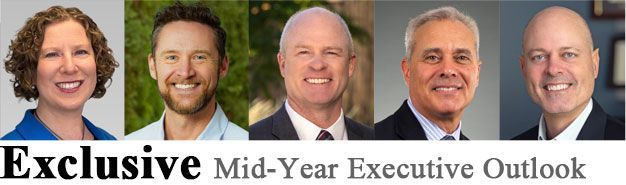
It's hard to believe we're already halfway through the year and that July is upon us. As the nation marks its 250th anniversary, it's an appropriate time to recognize the vital role architecture and engineering professionals have played in shaping America's growth, infrastructure, and prosperity. And as we do each summer, we connected with five industry leaders from across the country to gain their perspectives on current business conditions and the outlook for the remainder of 2026. They shared where they see the greatest opportunities for growth, how they are navigating workforce challenges, reflections on their career journeys, and how they plan to spend some well-earned time relaxing and recharging this summer.

Lora Byala, AICP
President & CEO
Foursquare ITP
Washington, D.C.
Tell us about Foursquare ITP and your capabilities and markets.
Foursquare ITP is a mission-driven transportation planning firm focused on sustainable modes of transportation. Our service lines include: Transit - transit service planning and implementation support ; Transportation Demand Management (TDM) - planning, operations, and evaluation for transportation demand management programs; Multi-Modal Infrastructure - planning and conceptual design of transit, bicycle, and walking infrastructure; Analytics - data science services, business intelligence, and solutions engineering for transit clients; and Advisory services - management consulting and outreach services tailored to transit clients.
.
We serve public sector clients at the local, state, and occasionally federal level. Founded 20 years ago, we've worked in 33 states and Canada from four offices, and we're nationally known—especially in transit and TDM—for high-quality, innovative, and implementable work.
How does the second half of the year look and heading into 2027? Are there specific growth drivers or opportunities (client or market sectors, geographies, etc.) you're seeing?
The transit sector has slowed due to funding uncertainty—100% of our work is public sector. 2025 was flat, and we expect 2026 to be similar, though two large proposals in our pipeline could change that. Still, we're pursuing aggressive five-year revenue and profit goals to support our ownership transition. A recent internal reorganization (functional roles, service lines, geographies) sharpened our business development, service offerings, and methodology consistency, with a renewed push into the Midwest, Southeast, and Texas. Our data science team is also turning internal tools into client-facing offerings, and we're building an affiliates network to broaden our reach.
Obviously Artificial Intelligence (AI) is sweeping through the workplace today, shaping business processes and helping solve complex problems. How has Foursquare ITP utilized AI across your staff and projects?
Our company has cautiously embraced AI. We have probably one of the most robust AI policies, which I’ve been happy to share with our colleagues at other companies. Our policy is centered on six principles, the first and most important of which is “human-led creative leadership.” We want to continue to create in a hands-on manner so that we – not AI – are the primary creators of our work. We use AI to be more efficient but not to think for us.
By far the biggest area that AI has been supporting our work has been with our data science team, which uses code to process and visualize extremely large and complex datasets. They’ve developed robust processes and QA/QC procedures to ensure that they meet that first AI principle – and AI has, in some cases, turned days of coding to minutes or hours. This has given us time, within fixed budgets, to work through some of the thorniest issues facing our clients that can’t be solved by AI, such as data governance and data pipeline integration. There’s definitely a lot of AI skepticism at Foursquare ITP, and rightly so. It is not a substitute for critical thinking, it can impart bias, and it can be inaccurate. Our AI Task Force, overseen by a member of our Executive Leadership Team, regularly updates AI guidance and shares best practices with employees across the company.
Last year you formally initiated a program for ownership transition and structure to help support the firm's long-term sustainability and vision. Can you share more on your rationale and implementation?
We started an internal ownership transition in 2024 as a long-term exit plan for myself and our other majority owner. I made this decision with my eyes wide open to the fact that this is not the most lucrative option, but for me the company has always been more about the legacy and the value that we provide the industry, while also making a comfortable living. I’ve made a lot of very good hires over the years, so I am confident that the team I’ve established will be able to lead the company into the next chapter.
We've made ownership affordable through conservative valuation and bonuses that help fund share purchases. Ownership criteria include minimums like level and tenure, quantitative metrics (work sold/managed, peer feedback), and qualitative measures—alignment with our values, putting the company first, and civility and respect. We're looking for strong contributors we genuinely want to be in business with.
You started the firm in 2006 and today are celebrating 20 years. What are your reflections on this journey? What advice would you give to aspiring entrepreneurs contemplating engineering and planning start-ups today?
When I started the company I wasn’t planning for it to become much more than a way to keep myself busy, so everything has been a surprise! It has been harder than I ever would have imagined and also so much more rewarding. In 20 years there are a lot of ups and downs – external ones like the 2009 recession, different levels of government support for transit, COVID, and rapid technological change – and internal ones like being selected (and rejected) for major projects, hiring and losing great employees, and navigating all the structure needed to support a growing company. All of this has taught me resilience – even though every change never gets easier.
My advice is to first build a strong network of relationships. That helped me get work when I first started and had no company qualifications to point to. Knowing how to develop and foster strong professional relationships will continue to be important – providing excellent service and products is equally important as having those trusted relationships in the industry. One other thing I’ve learned is to know what you don’t know and surround yourself with folks who can complement your skills – and don’t hire people who will just say yes. Having different viewpoints and discussions about how to approach things yields more success and provides others opportunities to rise in their own careers.
What’s on your summer reading list?
I am always reading a novel! I recently finished
Becoming Madam Secretary by Stephanie Dray, which is historical fiction about Frances Perkins, the first female cabinet secretary under FDR. I’m currently enjoying the
Island of the Sea Women by Lisa See, an author whom I’ve read a lot. It’s also historical fiction, about the Korean island of Jeju focused on the all-female diving collectives and the challenges and destruction the island faced during and following World War II. I also recently really enjoyed
The Correspondent by Virginia Evans – it was just such a joy to read.
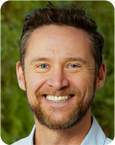
Blair Carlson, P.E.
CEO & Principal
AKS Engineering & Forestry, LLC
Tualatin, OR
Tell us about AKS and your capabilities and markets.
AKS is a consulting firm that's been at this for 30 years. We started in Oregon with a few people, a pickup truck, and more nerve than sense, and we've grown to nearly 600 people. We got here by building real relationships with good clients, growing solid people, and owning the outcome on every project we touch. The story is simple: we grow with our clients while staying true to our roots, which creates opportunities for our people and lets us serve clients better. Today, we offer 23 services across 15 offices, but the easiest way to explain AKS is this: we're the go-to team for development of all forms. We take a wide range of projects from the first sketch through ribbon-cutting. This includes huge master-planned communities, public utility and transportation work, utility-scale power generation, and just about everything in between.
How does the second half of the year look and heading into 2027? Are there specific growth drivers or opportunities (market sectors, geographies, etc.) you're seeing?
We’ve been focused on diversification into growing markets, geographies, and additive service lines. Funding cycles are always shifting, so there’s a lot of value and stability in being diversified. The private land development market is a little soft in the Pacific Northwest right now. Higher interest rates, an unfavorable tax environment, and broader economic uncertainty are having an impact. Things are stable, but the strong momentum we’ve seen in prior years just isn’t there right now. We anticipated this and took steps to prepare. We continue to be the go-to consultant for private land development in our regions and are realizing diversified opportunities to continue growing in several regions, markets, and service lines. We have grown in the public infrastructure and power markets over the past few years and expect continued growth in these spaces to be a priority through 2027 and beyond.
AKS has grown both organically and also by acquiring engineering, planning and surveying firms regionally. What do you typically look for in target firms, owners and talent in assessing fit and potential?
Simple - culture. Everything else is downstream of it. We have a robust internship program that lets both sides test the water before anyone commits, and a lot of our hires come through referrals from people already on the team. We hire for culture, work ethic, and a few other attributes that often don't show up on a résumé. When our people grow, we all win, so we work hard to give them real opportunities and material challenges.
On partnerships, many firms spin up a small army of attorneys, accountants, and consultants to build models that predict the value of a deal. We do our diligence (the numbers absolutely have to work) but the numbers are not really what makes or breaks it for me. Culture is the most critical component. Do the owners take care of their people? Do the teams sweat their client relationships? Do they own and take pride in their work? Are they active stewards of the community? Does the company do the right thing when nobody's watching? Treat people right, do the right thing, and success tends to follow.
Obviously, the industry is facing challenges in recruiting and retaining engineering positions at all levels. What are some of the tools and strategies AKS has used with onboarding and keeping good talent?
The recruiting and retention squeeze is real, and anyone who tells you they've fully solved it is selling something you don’t want. Here's what's worked for us. Our internship program is the front door - it lets us and the candidate find out if the fit is real before anyone signs anything, and a large share of our best people came through it. We lean heavily on referrals, because our team knows the bar and they don't refer people who'll embarrass them. When we’re going through the recruiting process, our teams focus a lot on values alignment, long term growth potential, collaborative skill sets, and technical capabilities.
Retention is where most firms drop the ball, and it comes down to two things: opportunity and ownership. We give people work that stretches them and a clear line of sight to where they can go – we have plenty of people who started as interns and now run pieces of the business. We invest in licensure and professional development because a challenged employee is empowered, and empowered employees make us stronger. We live, work, and play in the areas we operate, and our teams are vested in the success of every project. I love going down to our Wednesday lunches and seeing people genuinely enjoying each other’s company. That’s a huge success to me – providing good people opportunities to be successful and work with people they enjoy being around.
You've been with AKS for 12 years, advancing from Associate to CEO today. How would you describe your leadership style? Has it changed or evolved over this time?
Twelve years ago, when I was interviewing at AKS, I told three of the owners that, “I’m not a great engineer, but I know people and can figure stuff out.” I’m proud of the fact that I’ve never been the smartest person in the room. My focus is to find smart and capable people who are more right than I am, be a resource to help them, and then get out of their way. I'm hands-on by nature and constantly learning with the people around me. Early in my career, "hands-on" mostly meant I wanted to do the work myself so I could learn and stand behind what I was doing. The hard, necessary lesson of moving up was that a company doesn't scale on one person's red pen. It scales on trust, clear expectations, and letting good people own their results - including the mistakes.
I guess my style hasn't really changed at the core. I still want the direct details, I still can't stand corporate-speak, and I still believe this is a people business before it's an engineering / surveying, etc. business. What's changed is the radius. I used to be accountable for my projects. Now I'm accountable for continuing to build the kind of place where people can do their best work. That shift requires a lot more listening, thinking, and trusting than the younger version of me would've liked to admit.
What are your plans this summer for rest and relaxation?
In my limited spare time, I’m tending to my Christmas trees and grapes, mowing the fields, cleaning out chicken coups, or cutting firewood for the next AKS bonfire. But I genuinely love it - there's something grounding about being outside and getting things done. I have two daughters who are award-winning competitive dancers. So running around to practice and competitions takes up a lot of our time, but I love every minute of it. Beyond that, I'll get out to eastern Oregon to check trail cameras once or twice before archery season, put some miles on the quads at camp, and enjoy the pool with my family. The other big summer project is teaching my oldest daughter to drive – she’s been practicing with my F250 and side-by-side on back roads getting firewood and at hunting camp for years now, so I think we’ll survive.
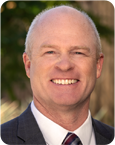
Gregory Haggerty, P.E.
CEO
Dibble
Phoenix, AZ
Tell us about Dibble and your capabilities and markets.
Dibble’s purpose is to have a positive impact on our communities. We view ourselves as a living company that learns and adapts to change, maintains a healthy company culture for people, and operates with conservative finances to maintain long-term strength and flexibility. Dibble’s four business units serve airport development, surface transportation, utilities, and land development markets with additional expertise in land surveying, flood control, and structures. We utilize diverse skillsets in planning, land surveying, engineering, and construction management to serve both public and private clients in all phases of the infrastructure life cycle. Dibble’s corporate office is in Phoenix, Arizona, and we manage operations and contracts in multiple mountain states of the western United States.
How does the second half of the year look and heading into 2027? Are there specific growth drivers or opportunities (client/market sectors, geographies, etc.) you're seeing?
Dibble is well-positioned to thrive in the second half of 2026 and early 2027. Backlog is strong, with multiple long-term contracts secured, active, and generating predictable income. Our pursuit pipeline continues to experience some natural churn across markets, driven by policy adjustments, global event uncertainty, rising interest rates, and shifts in federal spending priorities.
Nevertheless, demand for quality consulting services remains strong, supporting continued development, investment, and growth. Our strong contracts enable us to invest in our people—through internal and external leadership development, management training, and technical skill-building across all cohorts, departments, and positions. This investment in our staff has closed skill gaps, added depth, and strengthened judgment throughout the firm’s leadership and succession pipeline.
Part of your organic growth has been new offices, and you opened a Utah location this spring. What was behind the decision and what attracted you to the state?
Dibble’s founder, and two generations of firm leadership, were born and raised on the potato farms in Layton, UT. In 2026, Dibble formally opened an office in Orem, Utah to serve airport development clients seeking our expertise. Because of Dibble’s long history and close ties to the state, this geographic expansion feels more like coming home than entering a new market. Dibble is pleased to reconnect in Utah and bring our technical and leadership resources back home. Over time, we intend to serve the community across all our core practice areas.
The industry is certainly facing challenges in recruiting and retaining engineering positions at all levels. What are some of the tools and strategies Dibble has used with onboarding and keeping good people?
The workforce gap created during the Great Recession and then compounded by the Boomer Exodus significantly impacted our industry. For years, Dibble has followed a deliberate ’Build from Within’ plan, emphasizing internal promotions, structured development paths, and mentorship to close experience and leadership gaps. We also launched a ’Destination Dibble’ initiative to become the employer of choice, focusing on culture, flexibility, and meaningful work so that talent actively chooses our firm. It is working.
More recently, our ‘Scaling Up – Scaling Dibble with Future Leaders’ defined a ‘2035 Desired Future State’ for the firm. We are rapidly developing and placing talents where needed to make this vision a reality. At an industry level, Dibble partnered with ACEC Arizona to launch stadium infrastructure tours for middle school students, increasing awareness and excitement about engineering careers. It has been encouraging to see other states adopt and adapt this scalable idea within their own communities.
You've been with Dibble for 30 years, starting as a Project Engineer to CEO today. How would you describe your leadership style? Has it changed or evolved over this time?
As a living company, Dibble provides fantastic opportunities for both personal and professional growth, and that has shaped my leadership style over time. A culture of giving generously and investing wisely in people is central to our firm’s success, and it has become central to how I lead. My favorite leadership book is The Leadership Challenge by Kouzes and Posner. They boil down the role of a leader to: 1. Model the Way, 2. Inspire a Shared Vision, 3. Challenge the Process, 4. Enable Others to Act, and 5. Encourage the Heart.
This model both reminds me and inspires me each day. Our organization is fortunate to have many people who choose to apply their talents and strengths through Dibble. Their individual and combined abilities never cease to amaze me, and my leadership style continues to evolve as I learn from them.
What are your plans this summer for rest and relaxation?
At Dibble, we believe that time away from the office is not an option, it is a human necessity. Like world-class sprinters, we know that rest and recovery are needed after periods of intense focus and effort. I am pleased that our staff members have responded to regular reminders to take time away this summer. Personally, I enjoyed unplugged time with my family visiting multiple university campuses, riding roller coasters with my four teenagers at Dollywood, and experiencing nature’s beauty in the Appalachian states. We all need time away, and I try to model that for our team by truly stepping back, being present with my family, and returning ready for the next season of work.
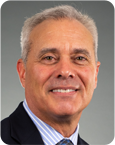
Michael Hein, AIA
CEO
The HFW Companies
Dallas, TX
Tell us about The HFW Companies and your capabilities and markets.
HFW is a national architecture and engineering (AE) platform built to address community infrastructure needs across the country. Founded in 2020, we’ve grown into a unified network of AE companies operating from 30 offices and concentrated in three of the nation’s highest growth regions: Texas, the Southeast, and the Mountain West. Today, our 720+ employees deliver a fully integrated, end to end service portfolio that spans civil engineering and CEI, architecture and interior design, survey/GIS, landscape architecture, environmental engineering, planning, structural engineering, and program/construction management.
Our model intentionally amplifies the expertise of our network firms. We provide the operational platform, technology systems, leadership, and shared resources that allow our companies to work seamlessly and deliver creative, multidisciplinary solutions for even the most complex infrastructure challenges. This approach has enabled us to serve our clients across commercial, institutional, residential, industrial, community infrastructure, and emerging sectors such as data centers. At our core, we are driven by purpose to accelerate growth through collaboration and continuous improvement for our firms, employees, clients, and the communities we serve.
How does the second half of the year look, and heading into 2027? Are there specific growth drivers or opportunities (market sectors, geographies, etc.) you're seeing?
The second half of this year looks steady and encouraging for us. We’re seeing real momentum in a few key areas, especially data centers, distribution facilities, and community infrastructure. Those markets continue to grow, and they align well with our platform's strengths. As we move through the back half of the year and into 2027, we expect stable growth, supported by a healthy backlog of projects across our core geographies.
HFW has scaled quite dramatically from its 2020 origins by adding architecture and engineering firms nationwide to your platform. What are some of the characteristics you typically look for with owners and targets in future partnerships?
Our partnership philosophy is rooted in cultural, strategic, and operational alignment. We’ve been able to scale by bringing high-performing A/E firms onto the platform, and we continue to look for companies that share our values and demonstrate the qualities needed to thrive in a growth-oriented, national, integrated network.
We typically look for owners and firms that exhibit: Strong reputations in their local or regional markets; leadership teams that are entrepreneurial and collaborative; technical depth and talent; a growth mindset; cultural alignment with our core values; and strong fundamentals today and a clear runway for continued growth.
This year HFW relocated its corporate headquarters from St. Louis to Dallas. What was the rationale behind that move?
While the majority of our executive and leadership teams are distributed across our core geographies, we wanted to align our headquarters with one of our fastest-growing markets and be closer to the company’s existing Dallas-area network-firm operations. I am based in Nashville and learned how to work from anywhere!
Your varied career path included positions at larger design firms before leading HFW. How have those experiences helped shape you as a CEO today?
Earlier in my career, I learned firsthand how hard it is to scale a firm without the right structure. In the 1990s, when I had my own small architecture practice, I struggled to grow beyond a one person operation. It wasn’t until I joined larger firms that I truly understood how big firms work and why they succeed. I saw the importance of having a clear vision, a good plan, the right resources, and most importantly, trusting other people who share the vision and move toward a common goal. Those experiences shaped how I lead HFW today. Building a national firm from scratch requires not just ambition but also an understanding of how to scale, execute on a plan, empower people, and create a platform where talented people can succeed together.
What are your plans this summer for rest and relaxation?
Outside of work, I’m an avid cyclist, and I spend most of my summer training with a local bike club called United by Design. It’s a diverse mix of architects, designers, engineers, and friends from across the AE community who share a passion for cycling and giving back. We ride to support charities like BikeMS, Pedal the Cause for cancer research, and Bike for Heroes for disabled veterans. Those events happen in the fall, so we spend the summer putting in the miles together. It’s a great way to stay active, stay connected, and contribute to causes that matter.
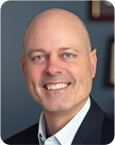
Pat Kennedy, P.E.
CEO
V3 Companies
Woodridge, IL
Tell us about V3 and your capabilities and markets.
V3 is an employee-owned firm driven to create fulfilling careers for our employees by tackling planning, infrastructure, and environmental challenges for clients and communities across North America. We have over 475 employees across multiple service lines and markets and we continue to grow through an entrepreneurial spirit and approach to seek “a better way” in all we do.
How does the second half of the year look and heading into 2027? Are there specific growth drivers or opportunities (market sector, geographic, etc.) you're seeing?
Following a strong first half we see an uptick across all regions and market sectors as we head into the second half of the year. A few specific trends that are leading the way are the Power & Energy market as our clients expand the national electric grid, mixed-use and retail development in Chicagoland, healthcare growth in the Carolinas, and water & transportation work throughout the Midwest. As a golf fan, the growth of our golf and master planned community team following the acquisition of Koontz Jones in Pinehurst, NC has been especially exciting to see.
V3 is an employee-owned firm and has an ESOP in place. Share how that model has been to your culture and in retaining and recruiting professionals?
We are a little unique in that we are actively unwinding our ESOP and have been growing our employee-direct ownership program for the past decade. This provides us with more flexibility and is a key element in creating fulfilling careers both professionally and financially. Our strong values and business model are very attractive for growing our team from within (we have a high percentage of entry level hire-to-owner stories), as well as for key hires looking for an entrepreneurial culture that rewards growth, client service, and contributions to the development of our team.
V3 has grown and diversified through select acquisitions over its history, and you've played a large role in those. What do you typically look for in target firms, owners and talent in assessing fit and potential?
In the past four years we’ve doubled in size, using various growth vehicles including acquisition, key hire launches, and organic client-focused growth in our existing regions and markets. Regardless of the method, we are looking for strong leadership with a long-term perspective centered around enduring client relationships in each market and community we serve. With that as our baseline, we have entered several new regions and offered clients more services and greater capabilities centered around their needs. It sounds simple, and somewhat methodical, but it’s working pretty well for us.
In January you assumed the President and CEO role at V3. How has that transition been? What have been some of your early initiatives or priorities to clients and staff?
We have such a mature and strong leadership team that has really made the transition to my new role feel seamless. We are developing our next five-year Strategic Plan to chart our future together; we launched internal Senior Leadership and Supervisor training programs to double down on our employee experience; and we have plenty of growth and client-focused initiatives to fill the rest of my time. Things are busy and I’m focusing on enjoying the ride with the team around me.
What are your plans this summer for rest and relaxation?
Kristy and I have four kids, one of whom is teaching English as a second language in Japan, so we took a trip that included his small island of Miyako-Jima, then Okinawa, and finally a few days in Taipei, Taiwan. The night markets were electric, the people and culture fascinating, and we learned so much about the history of the region. Truly an exceptional vacation and a nice escape from the daily routine. A great reminder that we are never too busy to live our lives and take on an adventure or two along the way!
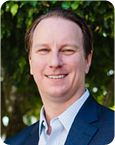
Steve Gido is one of the A/E industry’s leading M&A advisors. For over twenty years, he has served as trusted counsel to founders, owners, executives and boards of directors in pursuing both growth and exit strategy options. Over the course of his career, he has advised on a wide number of A/E transactions, representing both buyers and sellers of all sizes and disciplines.
Mark Your Calendar!
Latest Perspective
Are We Planning for the Future or Protecting the Present?
Most annual planning processes are designed as if the future will hold still. The frontier ahead, as Yoda noted, is “Difficult to see. Always in motion is the future.”

Latest Transactions