Most annual planning processes are designed as if the future will hold still. The frontier ahead, as Yoda noted, is “Difficult to see. Always in motion is the future.”
Ask a leadership team what next year looks like, and you will hear targets. Ask which assumptions must remain true for those targets to hold, and the room goes quiet.
In many firms, the assumptions are the strategy: clients will buy in familiar ways, talent expectations will stabilize, competitors will evolve gradually, and today’s economics will keep producing tomorrow’s margin.
The greatest risk may not be that your plan fails. It may be that your plan succeeds against assumptions that are outdated.
The forces in motion are structural and futuristic, not cyclical: workforce shifts, AI, market and economic volatility, ownership pressure, and changing client expectations. The harder question is how they combine to make your current model less valuable.
Across firms of very different sizes, markets, and services, the pattern repeats. Firms rarely struggle because they lack plans. They struggle because their planning disciplines are disconnected, their assumptions go untested, and their next leaders are being prepared for a business that is already changing.
Three horizons, one system
Many firms collapse three disciplines into one calendar exercise, then wonder why strategy feels like budgeting and KPI goal setting.
Scenario planning sets the outer frame. For ownership, workforce, infrastructure, or business-model questions, look ten to twenty years out. It does not predict the future, it stress-tests:
What could change the rules of our business, and which futures would our current model struggle to survive?
Strategic planning translates foresight into a flexible three-year plan with choices, capability priorities, investment triggers, and off-ramps. It asks:
What choices would keep us relevant across multiple plausible futures?
Annual business planning converts strategy into accountable commitments: capital, hiring, pricing, market focus, and measurable outcomes. It asks:
What must we commit, fund, measure, or stop in the next twelve months to be aligned with the Strategic Plan?
Scenarios inform strategy. Strategy governs the annual plan. Results provide evidence that updates both. When these handoffs break, budgeting masquerades as strategy. The firm becomes increasingly precise about next year while becoming less prepared for what could make next year’s assumptions obsolete.
Confidence should not replace curiosity
The ACEC Research Institute’s Q3 2026 Engineering Business Sentiment Study found nearly 600 executives confident in their firms’ finances, at +79, and in the industry, at +76. Median backlog held at 12 months and 65% expected hiring to increase. Yet the 12-month economic outlook had turned negative.
Confidence is a measure of the present. The outlook is a statement about the future. When they diverge, the gap is usually filled by assumption.
The Institute’s Redefining the Firm research describes an era of abundant intelligence in which in which digital labor expands capacity, project data becomes the industry's most underused asset, and AI-native competitors emerge. Microsoft’s 2026 Work Trend Index Annual Report frames the same shift as organizational rather than technological. Two research streams, one conclusion: the constraint is not the tools. It is whether leadership redesigns the business around them.
- If AI reduces the hours required to produce an outcome, what happens to a model that prices hours?
- If knowledge becomes searchable and scalable, where does experience still differentiate, and what must stay human because it requires judgment, trust, and accountability?
That is a value-creation thesis, not a technology headline.
Ownership and succession must follow the strategy
Ownership assumptions deserve the same scrutiny. ROG+ Partners’ perspective on the affordability gap describes the widening gap between a firm’s value and what the next generation can afford. The question is larger than transaction mechanics:
Can the current ownership model fuel the firm’s future, transfer value fairly, and attract the leaders the strategy requires?
For private equity platform CEOs, the clock is compressed: the thesis that justified the investment is a hypothesis about the future, and hold periods rarely forgive an untested assumption.
Replacing today’s leaders with people prepared to run today’s business model is not succession. It is replication.
Future-ready succession begins with the scenarios. What capabilities does each credible future demand? Who can make enterprise trade-offs, adopt technology without surrendering judgment, and protect the culture while changing the firm?
Leadership development is the bridge: meaningful strategic assignments, cross-functional decision rights, understanding of AI-enabled delivery, deliberate knowledge transfer, and evidence of readiness rather than tenure.
Perhaps the hardest question is this: Are we developing the leaders the future requires, or the leaders the current leadership team finds most familiar and comfortable?
One question that should change your plan
This planning season, begin with one question: What if our current assumptions are wrong?
Then do not move on until the leadership team can answer:
- Which three assumptions carry the greatest strategic or financial consequence?
- What evidence would tell us an assumption is weakening?
- What should we stop, start, accelerate, or protect?
- What trigger would redirect capital, talent, or leadership attention?
- Do we have the leadership capability and courage to act before the evidence becomes undeniable?
The firms that thrive will not be those with the most detailed plans, but those with the foresight to see change early, the flexibility to move, and the leadership depth and adaptability to act without losing what makes them distinctive.
The future will always be in motion. Is your firm moving with it, moving ahead of it, or using a more detailed plan to remain exactly where it is?
Continue the conversation in Naples
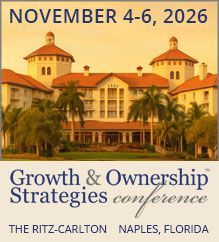
Join me at the ROG+ Growth & Ownership Strategies Conference, November 4-6, 2026, for Succession Without the Scramble: Strengths-Based Succession for Next-Gen Leaders and the Cultivating Leaders on Purpose: Strengths Based Succession Peer Lab. Bring your scenarios and assumptions. Leave better prepared to grow leaders for the future your firm must create.