Michael S. O'Brien is a principal in the Washington, DC office of Rusk O'Brien Gido + Partners. He specializes in corporate financial advisory services including business valuation, fairness and solvency opinions, mergers and acquisitions, internal ownership transition consulting, ESOPs, and strategic planning. Michael has consulted hundreds of architecture, engineering, environmental and construction companies across the U.S. and abroad.
Navigating the Talent Gap:
How M&A and Corporate Restructuring Are Shaping the Future of the A/E Industry
May 19, 2026
Our practice of conducting business valuations for firms in the A/E industry provides a unique perspective on emerging trends as they unfold. With a diverse array of firms seeking valuations for various purposes—ranging from mergers and acquisitions to succession planning and financial assessments—these evaluations offer valuable insights into the dynamics shaping the industry landscape. One challenge we’ve observed is that the A/E industry is grappling with a significant shortage of mid-career professionals. This gap was exacerbated by the Great Recession of 2007-2009, which led to widespread layoffs and a decline in new entrants into the A/E industry. Now in 2026, we find many firms with aging leadership teams and a lack of experienced talent to support effective succession planning and project execution. In response, companies are increasingly turning to mergers and acquisitions (M&A), adopting more flexible organizational structures and work environments, and developing new approaches to employee recruitment and development as strategic solutions to bolster their workforce and enhance their competitive edge.
The Great Recession Talent Exodus
The repercussions of the Great Recession were severe, resulting in the loss of numerous experienced professionals, including architects, engineers, and project managers. The uncertainty surrounding the job market prompted a significant exodus of talent, as many individuals sought more stable career paths in other industries. This loss created a next-generation leadership vacuum within firms, a vacuum now acutely felt, leaving younger employees without the mentorship and guidance necessary for professional growth. As illustrated in the charts below, it took nearly nine years for the A/E industry to recover to pre-recession employment levels, but what remains missing are those mid-career employees in their early 40s who could transition into technical and leadership roles.
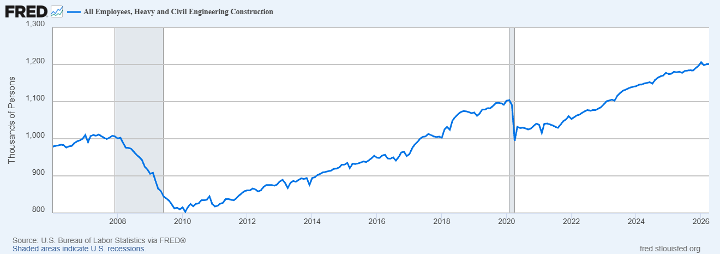
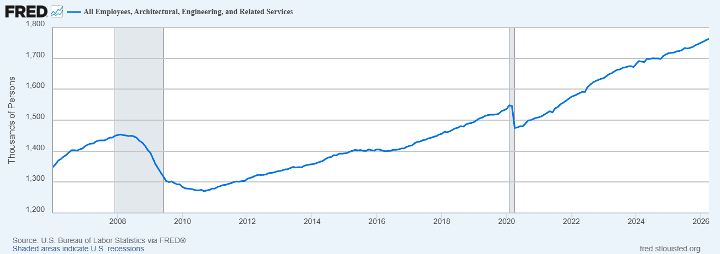
Effective leadership development relies on the transfer of knowledge and skills from one generation to the next. However, in many A/E firms, aging leadership teams, primarily in their late 50s to late 60s, are looking toward younger employees in their mid-30s to early 40s. This generational gap means that younger professionals often lack the mentorship needed to develop their skills and advance into leadership positions. Consequently, firms are prompted to seek innovative solutions to attract and retain talent while ensuring effective knowledge transfer.
Strategies to Address the Talent Gap
One of the most effective strategies A/E firms are employing to address the talent shortage is through mergers and acquisitions. By acquiring or merging with other firms, companies can significantly expand their talent pools and gain access to a broader range of expertise. This approach allows firms to integrate experienced professionals from acquired companies, thereby bolstering their workforce and enhancing their overall capabilities. As retiring leaders seek to monetize their investments, smaller firms—especially those with fewer than 50 employees—face increasing challenges. Relying solely on the next generation of leaders, who may have limited experience, poses a significant risk for these firms. Consequently, many are opting to merge to broaden their talent pool and secure a more stable future.
Internally, A&E firms are also restructuring their corporate frameworks to adopt more flexible organizational structures. By revisiting their work environments, firms can foster collaboration, innovation, and knowledge sharing, which are essential for attracting and retaining talent. Younger professionals are increasingly seeking workplaces that value creativity and provide ample growth opportunities. To address the talent shortage, firms are focusing on cultivating a culture of continuous learning. By restructuring their training and development programs, companies can offer ongoing opportunities for professional growth and skill enhancement. This emphasis on learning helps mid-career professionals remain relevant in a rapidly evolving industry and prepares them for leadership roles. Many firms are also relying on external sources for employee development, including executive coaching, technical training, and general business skills. One such program is the American Council of Engineering Companies’ (ACEC) Pathways to Leadership and Senior Executives Institute.
At the entry level, A&E firms are forming strategic partnerships with universities and educational institutions. These collaborations can involve internship programs, co-op opportunities, and curriculum development initiatives that align academic training with industry needs. By engaging with students early in their careers, firms can cultivate a talent pipeline and encourage new graduates to enter the A&E field. Increasingly, firms are reaching back to freshmen-level college students for recruiting purposes to ensure a steady influx of new talent.
When it comes to the office environment, the COVID-19 pandemic accelerated the adoption of remote work within the A/E industry, prompting firms to rethink their work structures. Embracing remote work capabilities allows firms to attract talent from a wider geographical area and provides the flexibility that appeals to younger professionals. This expanded talent pool can help mitigate the effects of the mid-career talent shortage. However, there are inherent risks associated with relying too heavily on remote workers. Developing employees in a remote setting can be challenging, and the loss of company culture and the transfer of institutional knowledge are serious concerns for many companies.
Ultimately, the dearth of mid-career architects and engineers is likely to be a significant driver of M&A activity within the industry. Firms that prefer to maintain their independence will have to employ a variety of strategies to bridge the employment gap and ensure their long-term success in an evolving industry.